

Affiliate disclosure: This post contains Amazon affiliate links. As an Amazon Associate, Potter's Hand Botanicals earns from qualifying purchases at no extra cost to you.
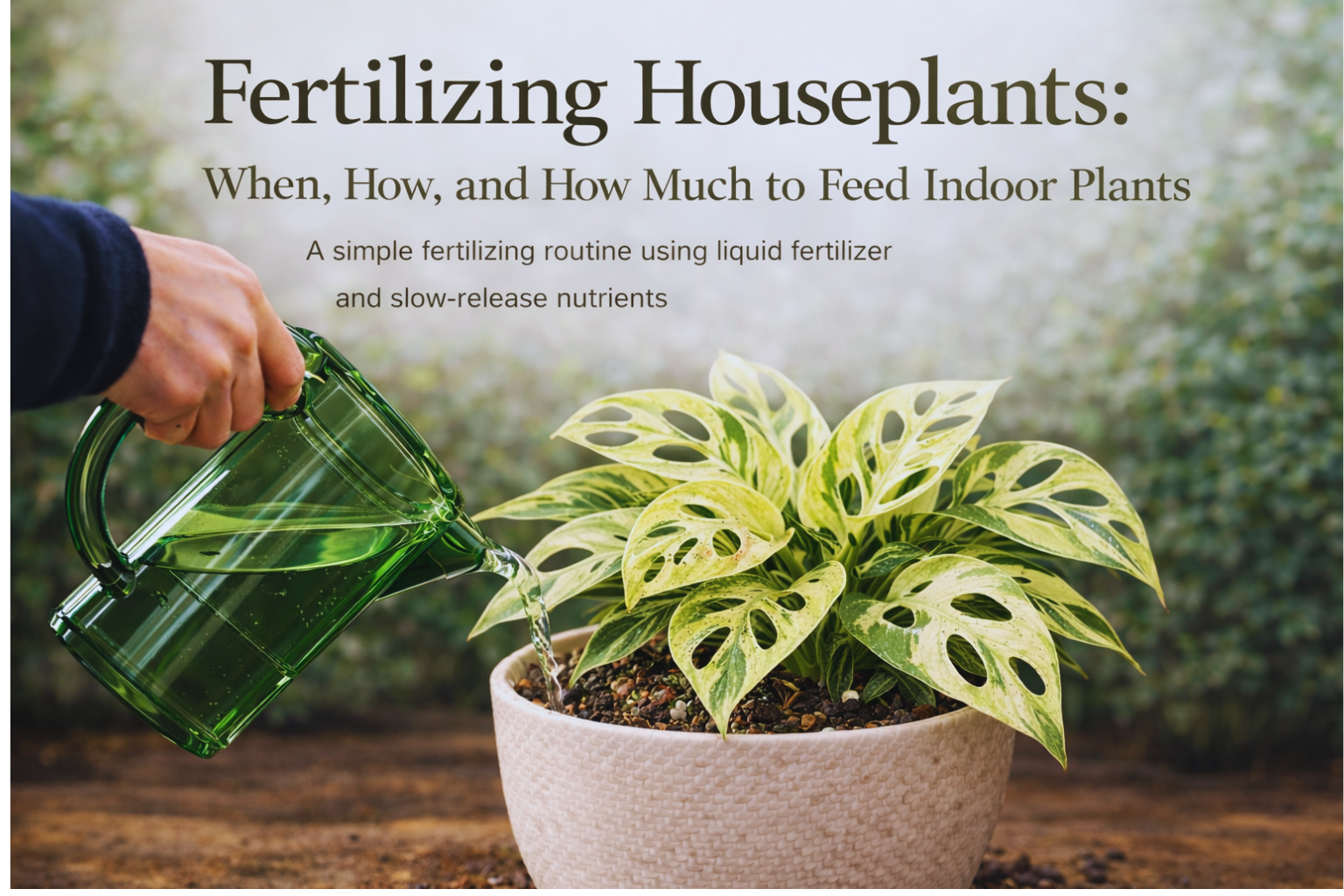
A practical guide to feeding houseplants without overdoing it.
Fertilizing houseplants can feel intimidating—especially when you're caring for rare or collector plants. Many growers worry about using too much fertilizer, causing fertilizer burn, or damaging sensitive roots.
But fertilizing houseplants doesn't need to be complicated. In containers, nutrients gradually wash out of the soil during watering, so fertilizing simply replaces what plants would normally receive in nature.
The goal isn't to force rapid growth. Instead, good fertilizing practices support steady growth, healthy roots, and strong foliage.
In this guide, I'll walk through how fertilizer works, the best time to fertilize houseplants, the fertilizing routine I use in my own plant collection, and how to recognize fertilizer burn.
Do Houseplants Need Fertilizers?
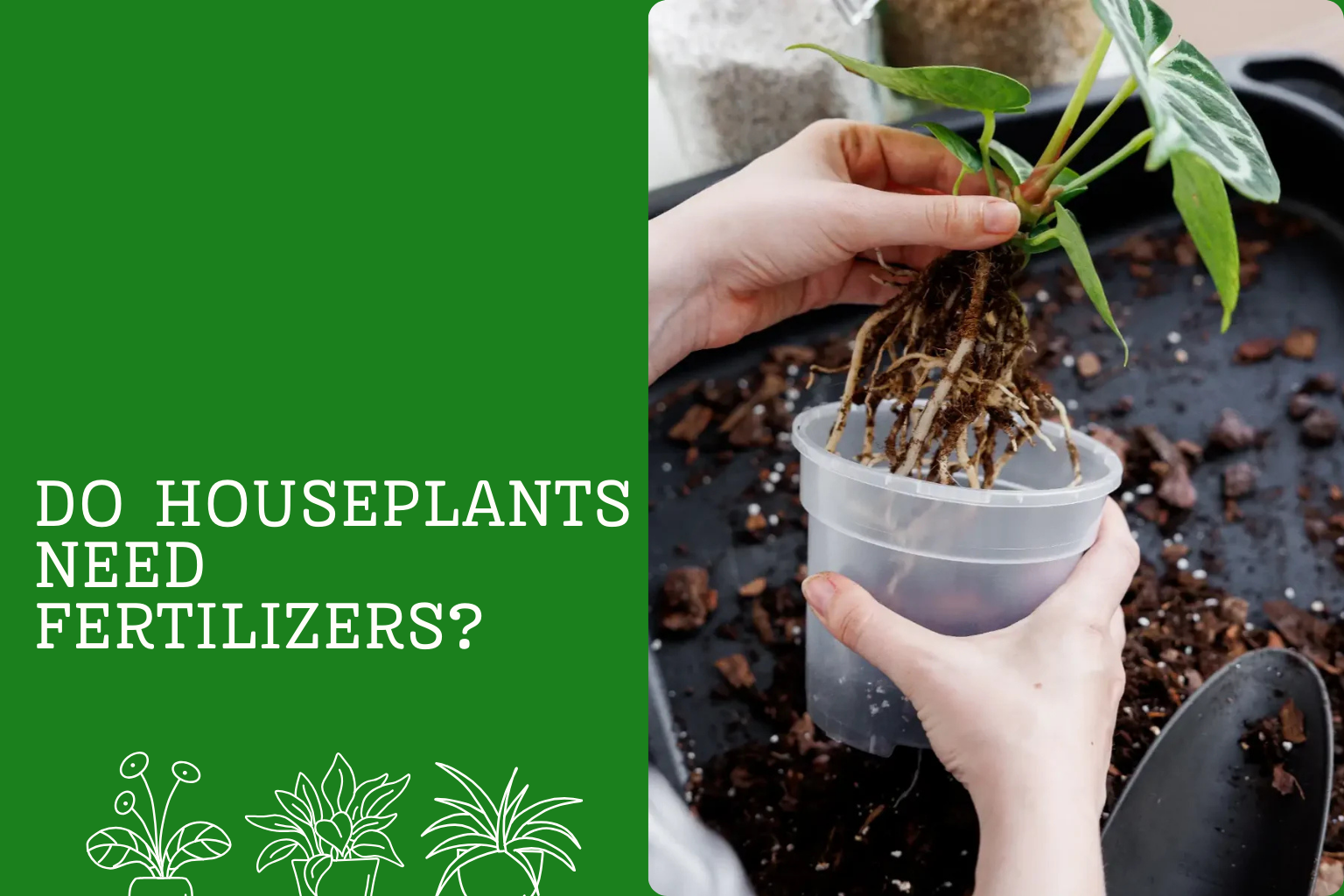
Most houseplants need fertilizer because nutrients in soil gradually get depleted. With each watering, small amounts are washed away—leading to slower growth and less vibrant leaves.
Fertilizer replaces what's lost, supporting healthy roots, stems, and foliage. Used lightly and consistently, it keeps plants growing strong without overwhelming them.
Understanding Fertilizer Numbers (N-P-K)
Most fertilizers display three numbers on the label. These numbers represent the primary nutrients plants require:
- Nitrogen (N) – supports leafy growth and chlorophyll production
- Phosphorus (P) – supports root development and energy transfer
- Potassium (K) – strengthens plant tissue and helps plants tolerate stress
This is known as the N-P-K ratio.
For example, a fertilizer labeled 9-3-6 contains:
- 9% nitrogen
- 3% phosphorus
- 6% potassium
Best Time to Fertilize
Plants benefit most from fertilization when they are actively growing—typically early spring through early fall.
During this time plants are:
- Producing new leaves
- Expanding roots
- Using nutrients efficiently
In winter, when light levels drop and growth slows, plants typically require much less fertilizer.
Many growers reduce feeding during winter months or pause fertilization until growth resumes.
Fertilizers I Use in My Collection
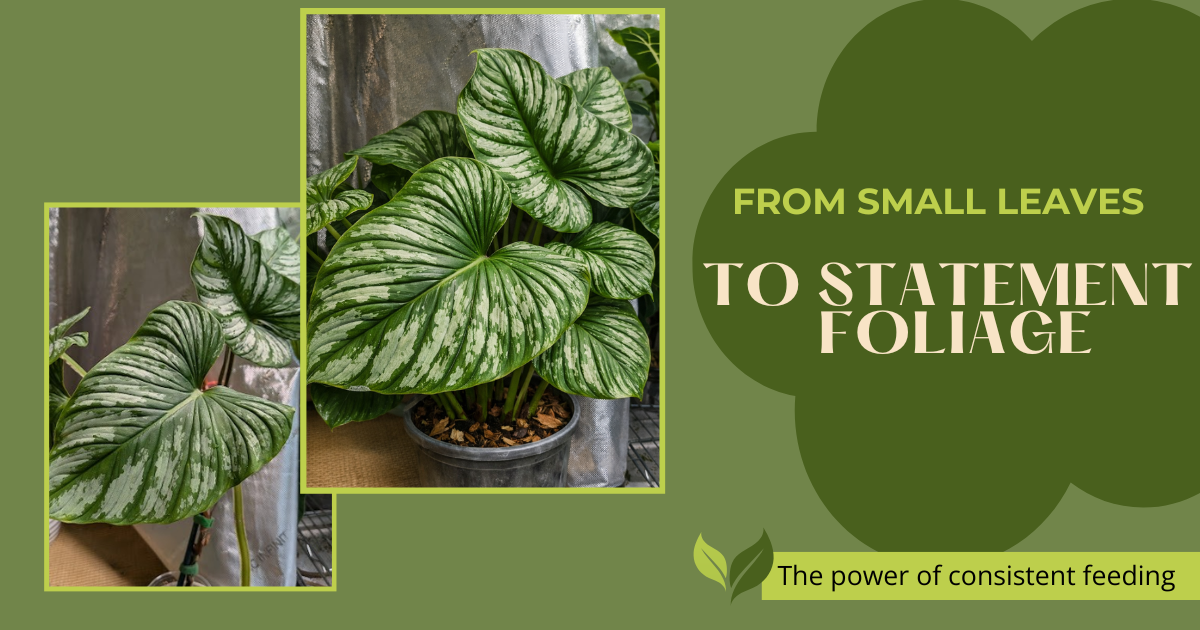
In my plant rooms, I keep fertilizing simple by combining slow-release fertilizer with diluted liquid feeding. The slow-release fertilizer provides a steady background supply of nutrients in the soil, while liquid fertilizer allows me to support plants during active growth.
This method works especially well for plants grown in chunky aroid mixes, where nutrients can wash out quickly during watering. For a guide to my chunky aroid mix, check out Dirt Matters: Top 5 Soil & Growing Media for Established Aroids and Begonias.
Liquid Fertilizer for Weekly Feeding
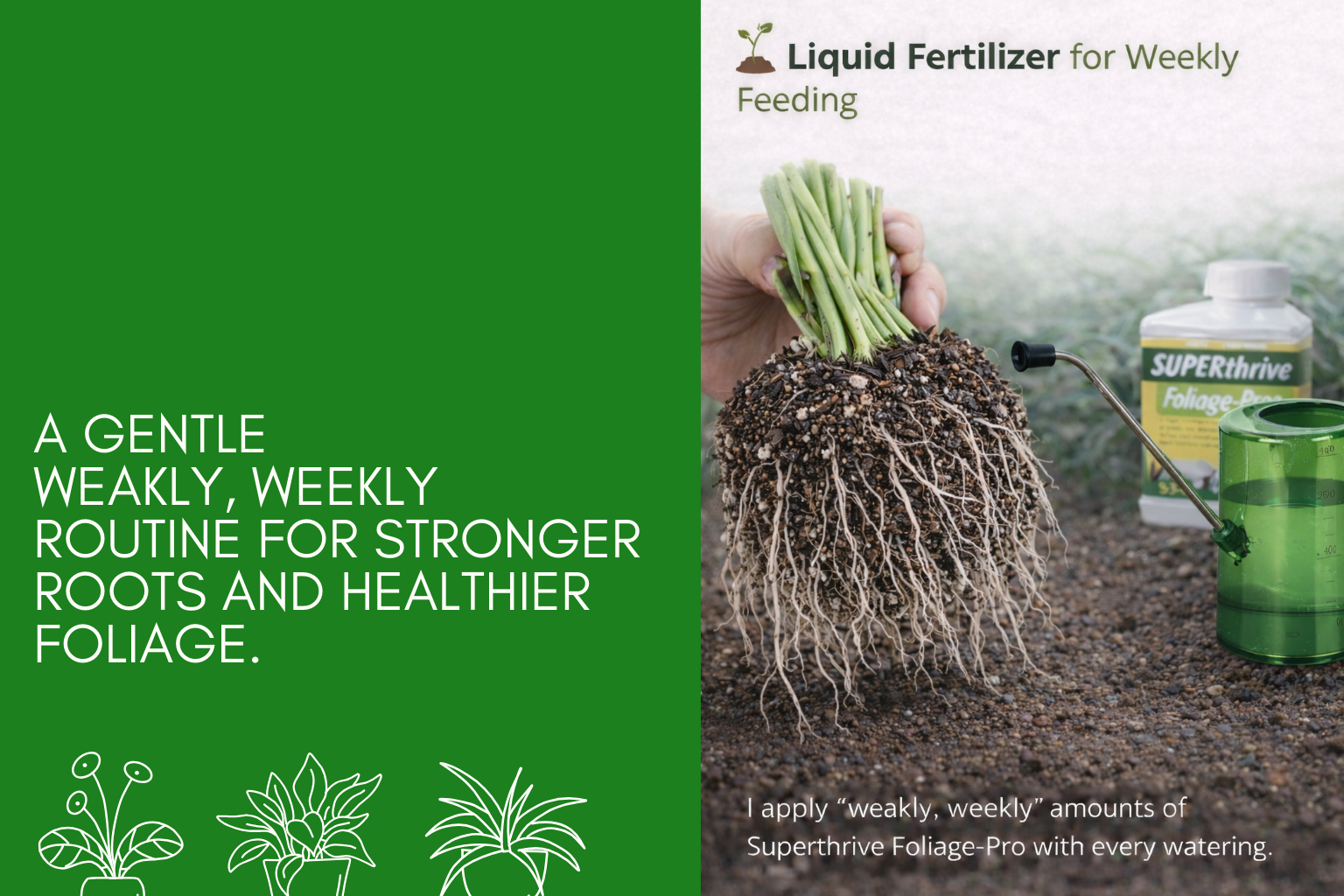
SuperThrive Foliage-Pro 9-3-6 Liquid Plant Food
This is one of the most widely recommended fertilizers for foliage plants—and it's a staple in my own plant care routine.
The 9-3-6 ratio closely mirrors the nutrient ratio many plants naturally use, making it particularly suitable for aroids and other tropical foliage plants.
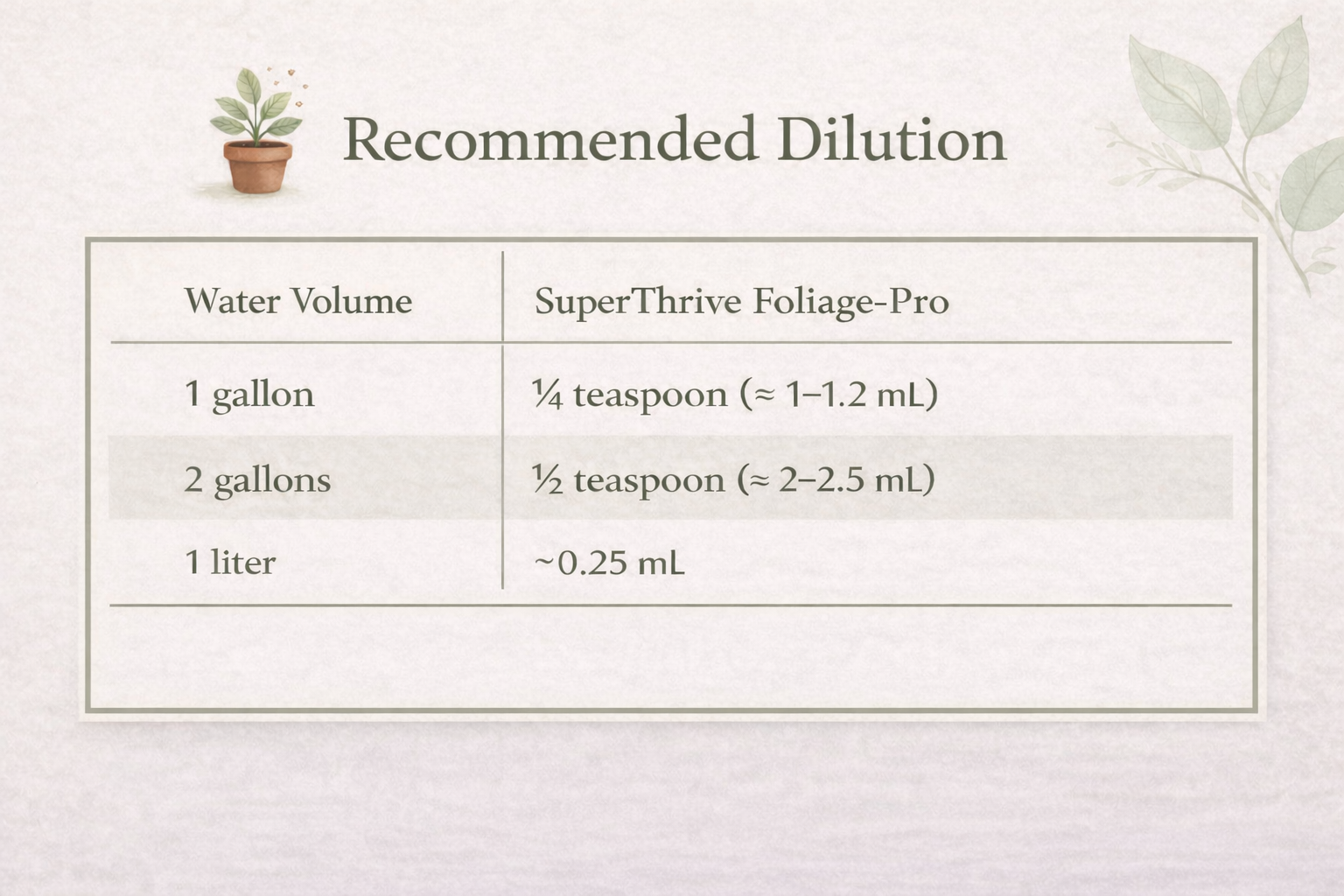
For regular feeding I follow the "weakly, weekly" approach—small amounts of fertilizer applied consistently during watering.
Because I also use slow-release fertilizer, I keep the liquid fertilizer lightly diluted to avoid nutrient buildup.
SuperThrive Foliage-Pro 9-3-6
My go-to liquid fertilizer for weekly feeding.
Slow-Release Fertilizer
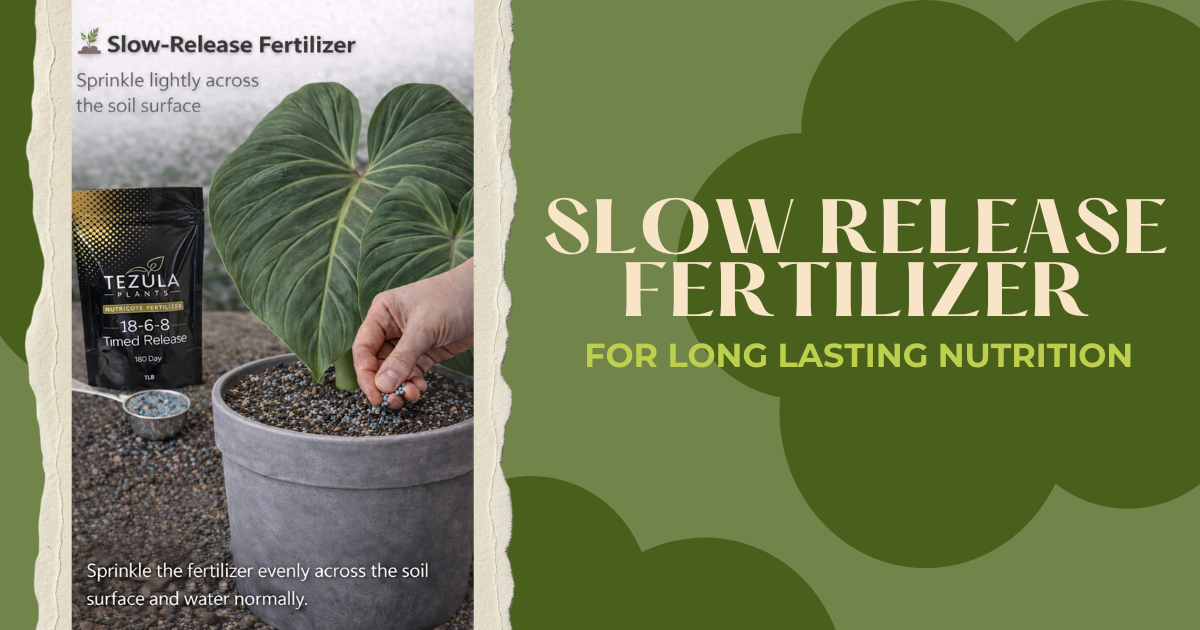
Tezula Plants Nutricote 18-6-8 (180-Day Timed Release)
This is the slow-release fertilizer I use in my plant collection for consistent, long-term nutrient support.
The 18-6-8 ratio provides steady nitrogen for foliage growth, along with balanced nutrients that support root development and overall plant health. Because it's a timed-release (Nutricote-style) fertilizer, nutrients are released gradually over time—helping reduce the risk of overfeeding.
It works well with tap, rain, or reverse-osmosis water and is especially helpful in chunky aroid mixes where nutrients can wash out more quickly.
To apply, sprinkle the granules evenly across the soil surface and water as usual.
Tezula Plants Nutricote 18-6-8 (180-Day)
Steady, long-term nutrient support.
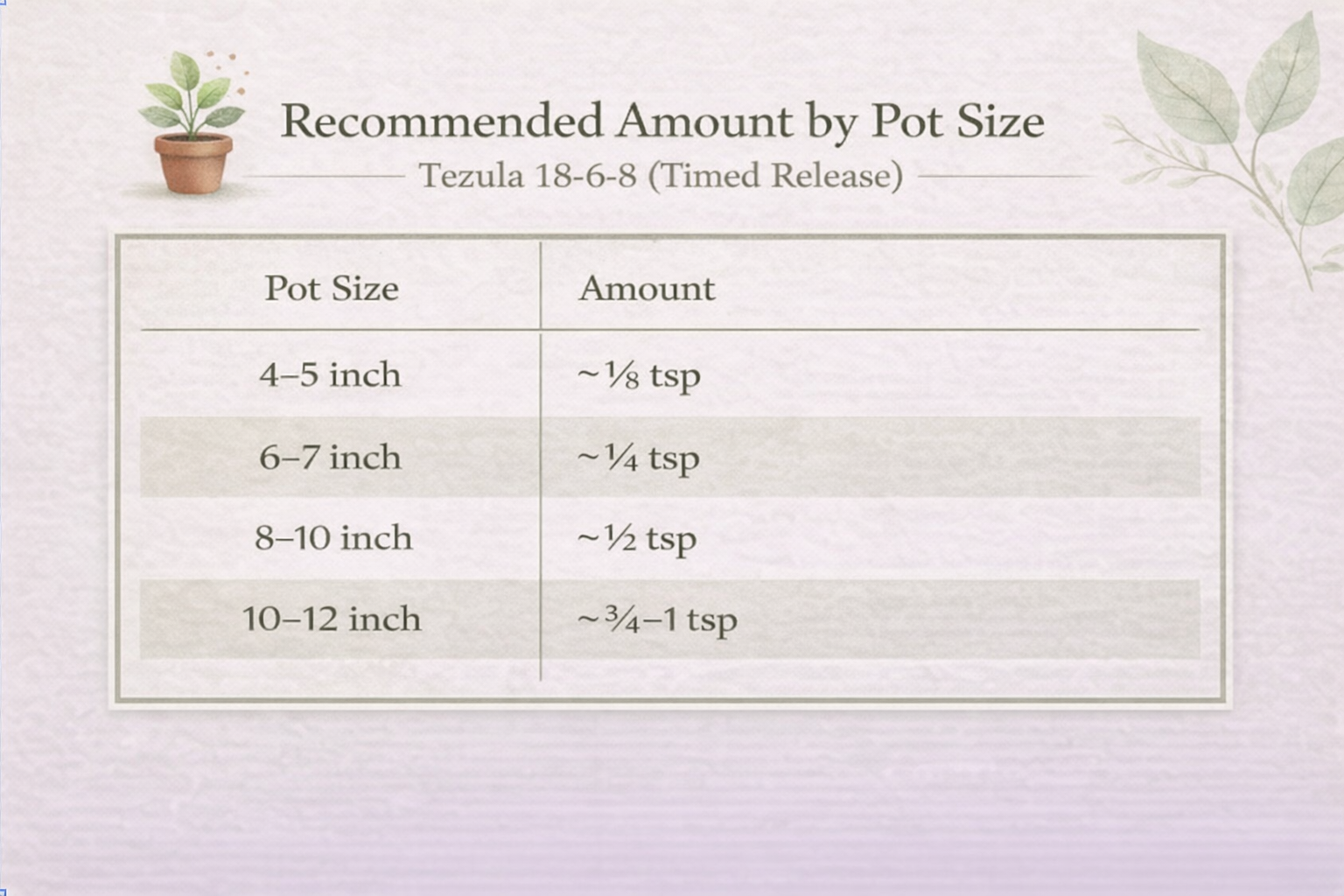
When I Add Slow-Release Fertilizer
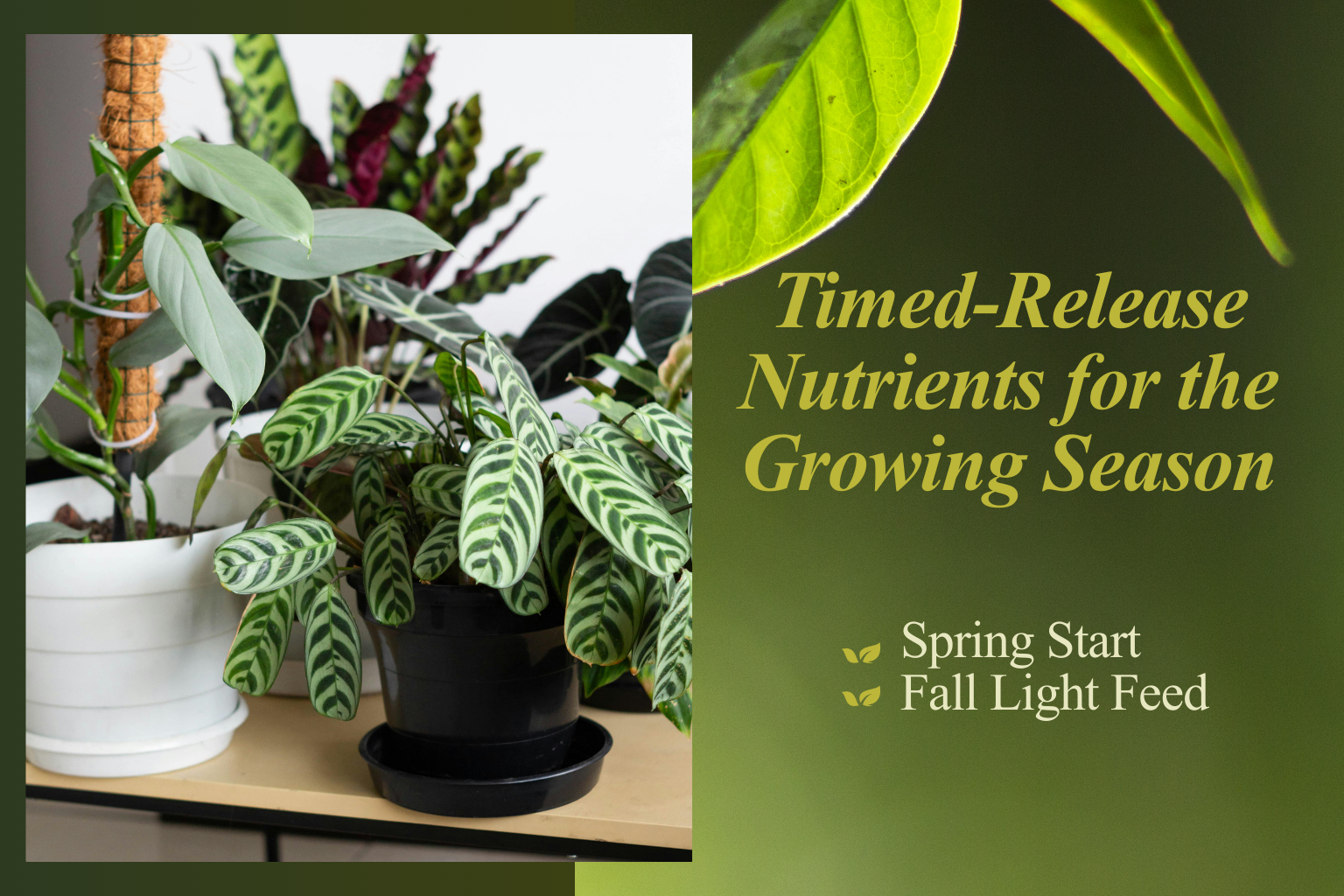
Because this is a 180-day timed-release fertilizer, I typically apply it twice per year:
Application Schedule
- March – Kickstarts spring growth
- September – Supports late-season growth into fall
This timing provides steady nutrients throughout the growing season without the need for frequent reapplication.
During winter, I generally avoid adding additional slow-release fertilizer since plant growth slows and nutrient demand is lower.
Timed-release fertilizers like Nutricote are designed to gradually supply nutrients over several months, so applying more too soon can lead to excess buildup in the soil.
Why I Combine Slow-Release and Liquid Feeding
Using both fertilizers allows nutrients to be available in two ways:
- Slow-release fertilizer provides steady background nutrition in the soil
- Liquid fertilizer supports plants during active growth
This combination helps maintain consistent nutrient availability without relying on heavy fertilizer doses.
Recognizing Fertilizer Burn
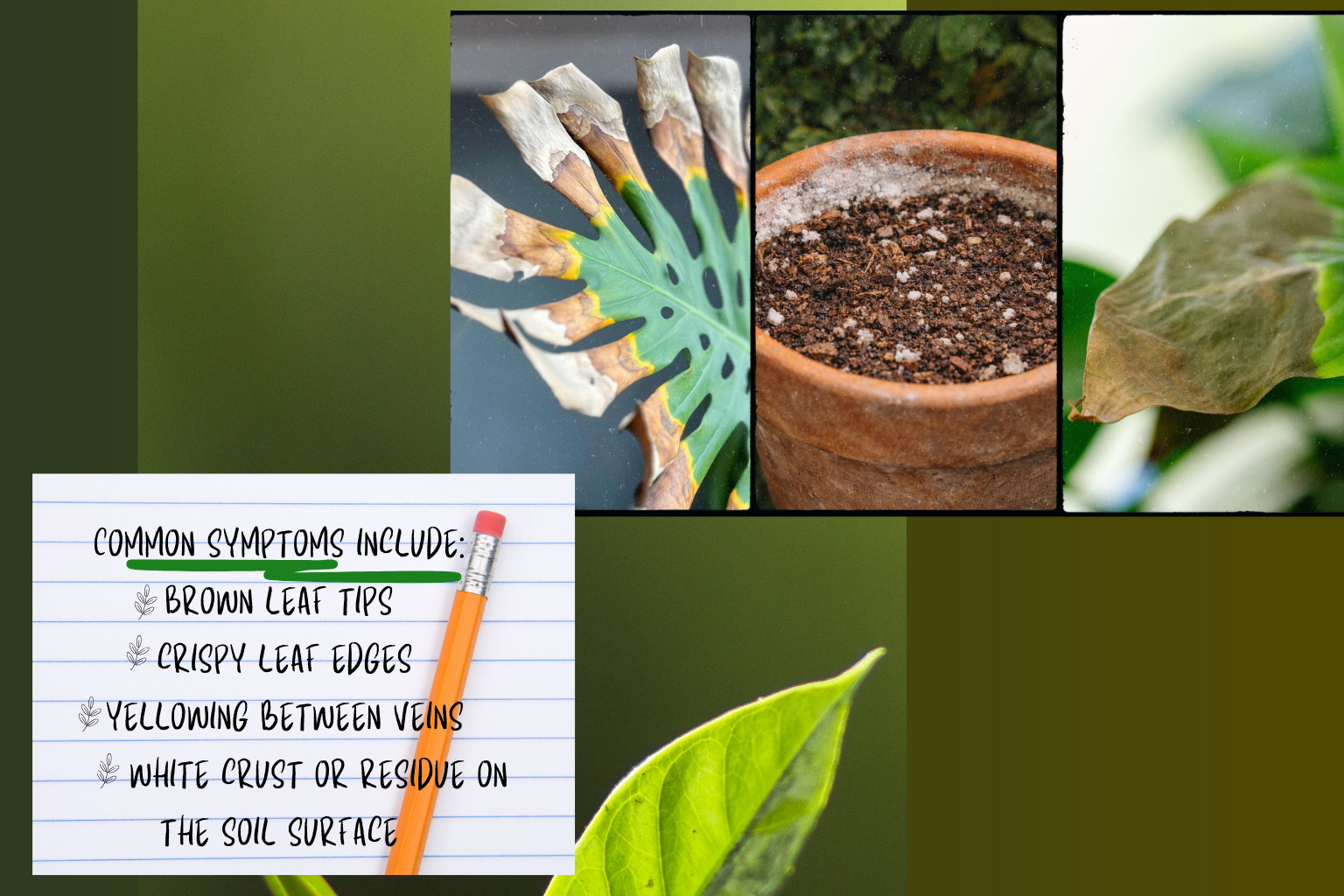
Fertilizer burn occurs when excess nutrient salts accumulate in the soil and damage plant roots.
Common symptoms include:
- Brown leaf tips
- Crispy leaf edges
- Yellowing between veins
- White crust or residue on the soil surface
If fertilizer burn occurs, flushing the soil with water can help dissolve and remove excess salts.
How to Avoid Fertilizer Burn
Fortunately, fertilizer burn is easy to avoid when fertilization is done thoughtfully.
Some helpful practices include:
- Using diluted fertilizer solutions (see recommendations above)
- Fertilizing lightly but consistently
- Avoiding excessive fertilizer applications
Plants generally respond better to gentle, steady feeding rather than heavy doses of nutrients.
Fertilizing Do's & Don'ts
Do
- Flush soil monthly to prevent salt buildup
- Water lightly before fertilizing
- Wait 2–4 weeks after repotting before feeding
- Use a reduced slow-release dose when repotting (see exceptions below)
Don't
- Don't fertilize dry soil
- Don't overapply fertilizer (more ≠ better)
- Don't fertilize immediately after repotting (unless conditions below apply)
Exceptions (When You Can Fertilize at Repotting)
You can sometimes add slow-release fertilizer during repotting if:
- The plant was very root-bound and healthy
- You're using a chunky, low-nutrient mix (like aroid mixes)
- You apply fertilizer at a very light dose
Adding Worm Castings
In addition to fertilizer, I occasionally incorporate worm castings into my potting mix.
Worm castings provide several benefits:
- Slow-release nutrients
- Beneficial microbes
- Improved soil structure
They act as a gentle, natural supplement that supports overall plant health without overwhelming the root system.
Worm Castings
-
Worm Castings — Higher nutrition for foliage & blooms
https://amzn.to/4qmNuJZ
Recommended Supplies
Tools
-
Clear Watering Can
https://amzn.to/4bg6WUC -
Pruners
https://amzn.to/4dtK717 -
Repotting Mat
https://amzn.to/3N7nIw4 -
Plastic Measure Cups
https://amzn.to/4bi81LK -
Syringe, 5 ml
https://amzn.to/4lAk4Y0 -
Sink Protector (for water flushes)
https://amzn.to/4cNWhSi
Potter's Hand Botanicals Takeaway
Fertilizing doesn't need to be complicated. Healthy growth comes from balance—good light, proper watering, breathable soil, and steady nutrition. When used thoughtfully, fertilizer simply supports the natural processes that allow plants to thrive. Feed lightly, observe your plants, and adjust as they grow. Over time, your plants will tell you what they need.